ICT Trading Strategies: Concepts, Entry Rules and Backtesting
Understand ICT concepts, then test one clearly defined sweep setup. Includes entry timing, costs, failed patterns and a practical review checklist.
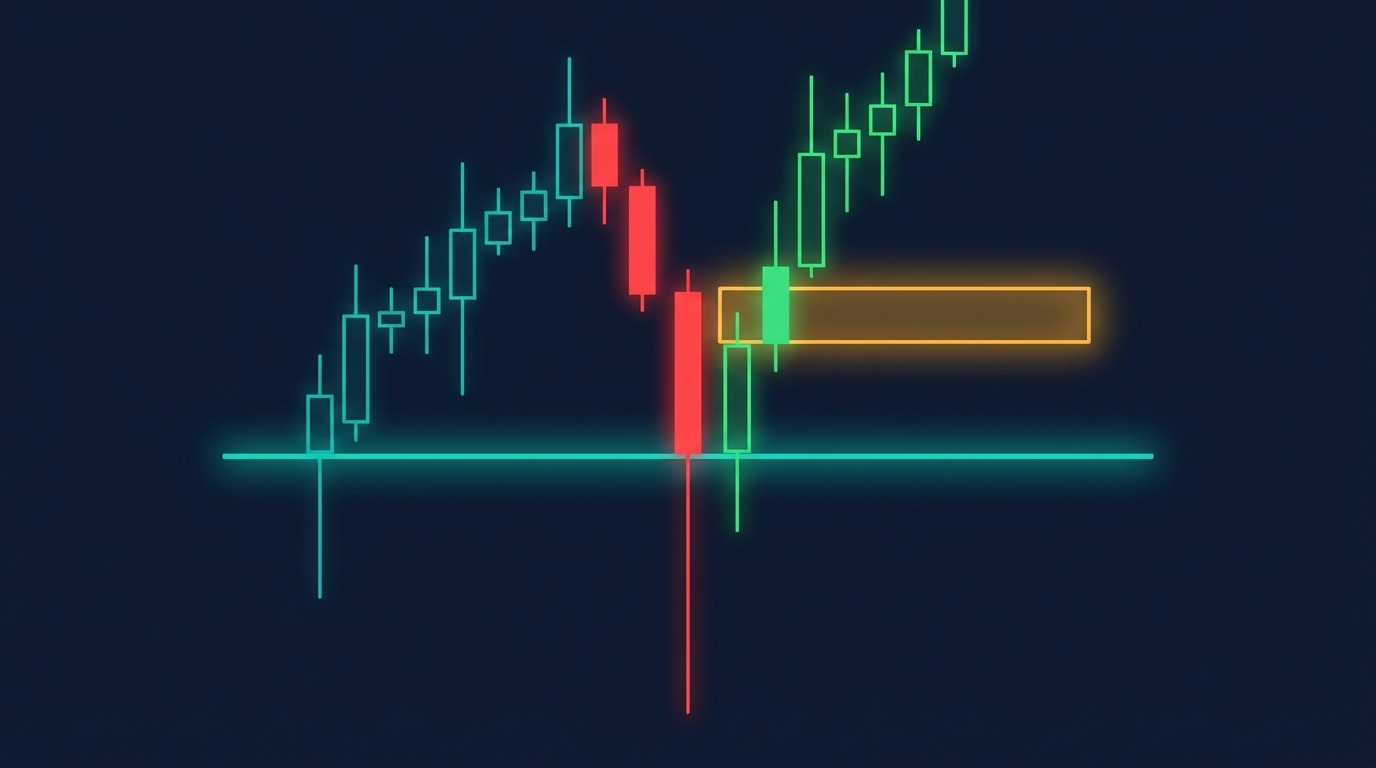
ICT trading uses a set of price-analysis concepts associated with the Inner Circle Trader approach: liquidity sweeps, fair value gaps, market structure shifts, order blocks and time windows. The terms can help describe a chart, but a useful backtest needs precise rules for identifying each event before the outcome is known.
This guide defines the main ideas and provides one reproducible practice exercise. It does not claim that a label reveals institutional intent or that an ICT setup has a universal success rate.
The main concepts in plain language
| Concept | Working description | Question to settle before testing |
|---|---|---|
| Liquidity sweep | Price moves beyond a chosen level and returns | Which level, how far beyond it, and what confirms the return? |
| Fair value gap | A specified three-candle price relationship | Do you use wicks or bodies, and when is the third candle complete? |
| Market structure shift | Price breaks a previously defined swing in the opposite direction | How and when was that swing confirmed? |
| Order block | A selected candle or zone used as a potential reaction area | Which candle qualifies, and what invalidates the zone? |
| Killzone | A chosen time window for observing a setup | Which timezone and daylight-saving convention apply? |
| Power of 3 | A range, an excursion and a later directional expansion | Can each stage be defined without seeing the day's final move? |
These are working descriptions. Different traders and scripts use different definitions. Choose one version and record it before comparing results.
For more detail, use the dedicated guides to liquidity sweeps, fair value gaps, order blocks and market structure. Keeping those concepts on their own pages also makes it easier to revisit the precise rule you are using.
A fair value gap example without future information
Consider three consecutive candles A, B and C. One simple bullish definition requires A's high to be below C's low after C has closed. The interval between those prices is the candidate zone.
That condition cannot be confirmed at A or B. If a historical marker appears across earlier candles, it does not mean the completed pattern existed then. Record the confirmation time as well as the location of the zone.
This example says nothing about whether the gap must be filled or why a participant placed an order. A price relationship and an explanation of market motives are different claims.
A sweep-and-confirmation exercise
The following long-side rules are an original practice specification. They are not presented as the canonical ICT model or a validated strategy:
- Choose one instrument and five-minute candles.
- Define a fixed reference range from 09:00 through 09:25 New York-time opening timestamps.
- From 09:30 through 10:25, wait for the first completed candle that trades below the range low and closes back inside it.
- After that sweep candle closes, require a later completed candle to close above its high within the same signal window.
- Enter at the next available bar's open. Place the stop at the sweep candle's low, with an instrument-valid buffer chosen before testing.
- Set the target at 2R from the assumed entry. End any remaining position at the 11:00 candle's open.
- Take at most one trade per day; skip if the entry leaves the stop on the wrong side.
Keep a written treatment for missing data, scheduled announcements and candles containing both stop and target. A no-signal day stays in the record.
You can add a gap condition later, but that creates a new version. Finish the simpler baseline so you can measure what the additional requirement changes.
Distinguish a repeatable setup from an attractive annotation
Imagine a chart with several prior lows and three possible reaction zones. If you select the level only after seeing the reversal, the result measures your ability to explain history.
Force the selection to happen before revealing the next candles. Save the level, the reason it qualifies and the time it became known. If the method needs discretion, record that judgment honestly rather than presenting it as a mechanical rule.
The trading journal template can include a short entry screenshot and a fixed setup-version tag. Keep failed examples next to successful ones.
How to investigate whether the setup is useful
Use consecutive available sessions, then reserve a later block for unchanged rules. Record every eligible occurrence, cost assumption, skip and uncertain outcome.
Compare average net R, drawdown and the concentration of results in a few trades. Keep sample counts visible. Trying many combinations of time windows and confirmations creates more opportunities to find a flattering historical result; preserve the rejected versions in an experiment log.
The backtesting guide explains that process. The win-rate calculator can help check outcome arithmetic, but it cannot validate an interpretation of market behavior.
Common questions
Is ICT the same as a complete trading system?
The label alone does not specify entries, exits, size or data requirements. A complete test needs those decisions written down, regardless of the vocabulary used to describe the setup.
Can the same concept be tested on forex and futures?
You can investigate a written price rule on different instruments. Keep their tick/point values, time conventions, data sources and costs separate. A positive result on one market is not evidence for another.
Can an indicator automate the setup?
A script can implement rules that are precise enough to code. It cannot settle ambiguity in the original definition for you. Check when each value becomes known and verify the script against a few manually inspected examples.
What is the best ICT setup?
There is no defensible universal answer from the name alone. Start with a setup you can define and reproduce, then evaluate its net outcomes and limitations on data not used to select the rules.
Test the next decision in replay
Create a TestMax account and choose an eligible market with suitable history. The Free plan has a limited recent window for eligible instruments; supported exchange futures require Pro. Review current plans and the features overview before selecting the workflow.
For the first exercise, record the level before the sweep, the confirmation before entry and the original stop before the outcome. That sequence makes the result reviewable, even when the trade loses.